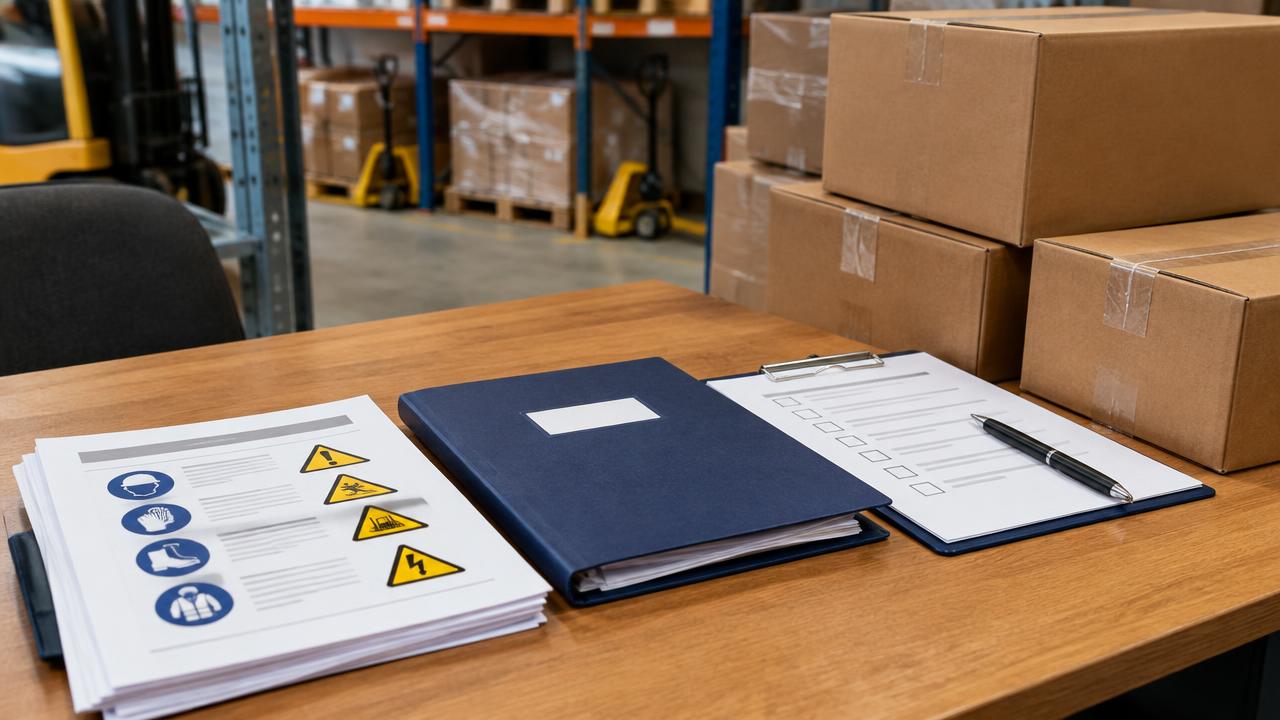
Chemical documentation is often treated as paperwork to file and forget. In practice it is the only reliable record of what a product is, how it must be handled, and what to do when something goes wrong.
This guide explains the main documents, how to read a safety data sheet without reading all sixteen sections every time, and what a farm, dealership or industrial buyer should keep on file after delivery.
The four documents that matter
Most chemical purchases involve four documents, and each answers a different question.
- The product label — the approved uses, crops, doses, timing, precautions and first aid. It is the legal instruction for use.
- The safety data sheet — the detailed hazard, handling, storage, spill, transport and emergency information, usually in sixteen standard sections.
- The certificate of analysis or batch record — confirmation of what a particular batch contains, where the supplier provides it.
- The commercial documents — the quotation, invoice and delivery note that establish what was bought, in what quantity and when.
Reading a safety data sheet efficiently
Safety data sheets follow a standard structure, which means you can go straight to the section you need instead of reading the whole document.
The sections most people actually need
Section 2 gives the hazard classification and the warning statements — read this before the product enters your premises. Section 4 gives first-aid measures; this is the section to have at hand during handling, not to look for after an incident. Section 7 covers handling and storage, including incompatibilities and temperature requirements.
Section 8 lists exposure controls and the personal protective equipment required. Section 6 explains what to do about an accidental release. Section 13 covers disposal, and Section 14 covers transport information, which matters when goods move by road.
Making it usable on site
A safety data sheet in an office drawer helps nobody in the store room. Keep a copy accessible where the product is handled, and make sure the people doing the handling know which section to open.
Where staff read Urdu more comfortably than English, walk through the hazard, first-aid and protective-equipment sections verbally as part of training, and keep the written document on file.
What to keep on file after delivery
A workable record system is simple enough to maintain during a busy season. For each product, keep the label information, the safety data sheet, the batch or lot number, the purchase date, the supplier details, the quantity received and the storage location.
For applications, a short field record is valuable: date, field or block, crop, product, rate, area treated, operator, weather conditions and the pre-harvest interval that applies. These records support the next season's planning, help diagnose a poor result, and are frequently requested by buyers, processors and auditors.
Stock records prevent quiet waste. Knowing what is already on the shelf, in what quantity and how old it is, avoids duplicate purchases and reduces the pile of obsolete product that eventually becomes a disposal problem.
- Product name, active ingredient or grade, formulation and pack size.
- Batch or lot number and purchase date.
- Supplier name and contact details.
- Quantity received, quantity used and current stock.
- Storage location and any storage conditions from the label.
- Application records with date, crop, rate, area and operator.
Documentation for businesses and industrial buyers
For a dealership, a processing unit or a factory, documentation also supports internal control: staff training records, authorised handler lists, incident reporting, and evidence for customers or auditors that the chemical chain is managed.
Traceability is the practical benefit. If a question arises about a batch, records linking the invoice, the batch number, the storage location and the application or processing date make the answer a five-minute exercise instead of a guess.
Where a product is resold, keeping the original label intact and passing the safety data sheet to the next handler is part of responsible supply, not an optional courtesy.
Asking for documents at the right moment
Documents are easiest to obtain before dispatch. Request the label and safety data sheet at the inquiry stage, alongside the quantity and pack size, so that everything arrives together and nothing delays the delivery.
Rosechem Life Science supplies crop protection chemicals, plant nutrition products, soil health products and industrial chemical solutions from Lahore and works through written inquiries. Documentation requests can be included in the contact form, sent to rosechemlifescience@gmail.com, or raised by phone on 042-37138243.
Frequently asked questions
What is the difference between a label and a safety data sheet?
The label is the approved instruction for use — crops, doses, timing and precautions. The safety data sheet is the detailed hazard and handling document covering storage, spills, protective equipment, transport, disposal and first aid.
Which safety data sheet sections should I read first?
Section 2 for hazards, Section 4 for first aid, Section 7 for handling and storage and Section 8 for protective equipment. Read Sections 6, 13 and 14 for spills, disposal and transport.
What records should a farm keep after spraying?
Date, field, crop, product, rate, area treated, operator, weather and the applicable pre-harvest interval. These records support planning, troubleshooting and buyer or auditor requests.
Who should have access to the documentation?
Anyone who stores, transports, handles or applies the product, plus whoever is responsible for safety and record keeping at the site.
When should I request documents from a supplier?
At the inquiry stage, together with quantity and pack size, so they can be prepared before dispatch rather than chased afterwards.
Further reading and sources
These independent organisations publish guidance on pesticide management, plant nutrition and chemical safety. They are useful background reading alongside the product label and safety data sheet.

Article author
Anwar Hussain
Anwar Hussain is the owner and key contact of Rosechem Life Science, a chemical supply company based at 16 Km Multan Road, Pakka Meel Stop, Shah Pur, Lahore, which supplies crop protection chemicals, plant nutrition products, soil health products and industrial chemical solutions. Articles draw on product documentation and publicly available agricultural guidance, and give general information only. They do not replace the product label, the safety data sheet or advice from a suitably qualified professional for a specific field or process.